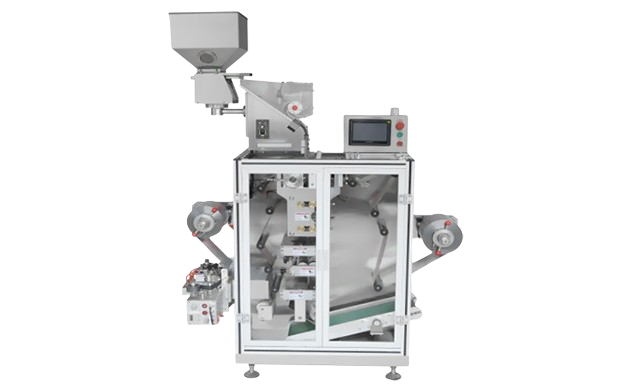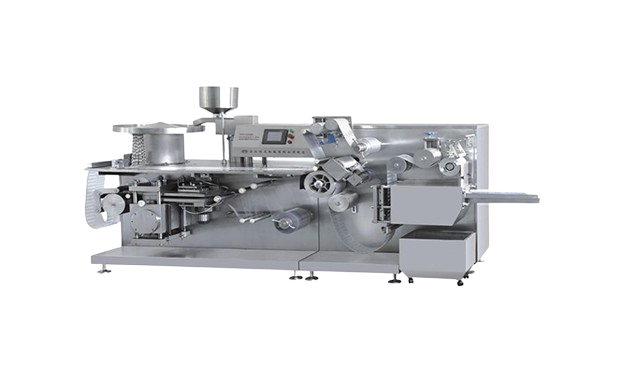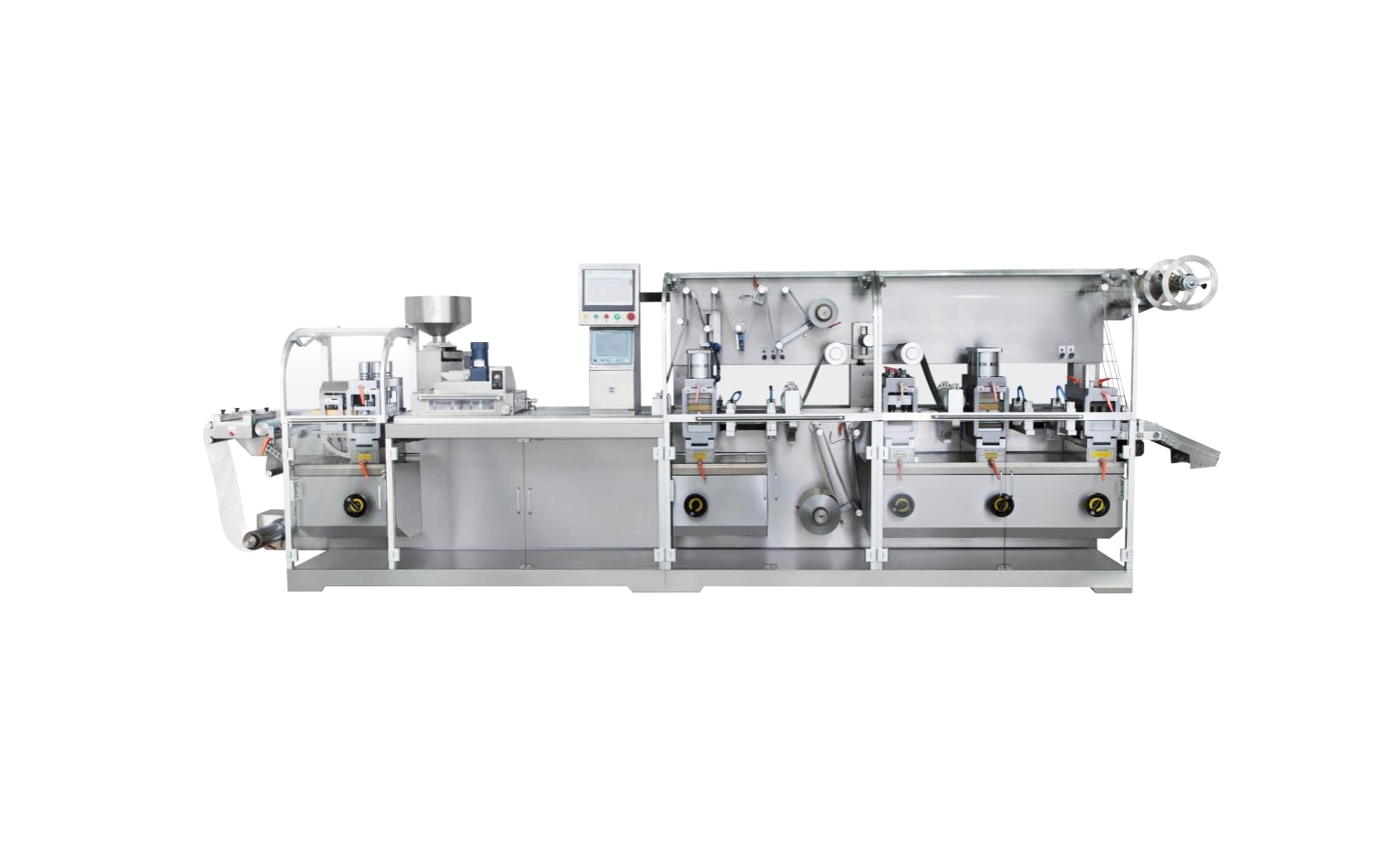
A blister packing machine typically costs between $15,000 and $280,000 in 2026, depending on automation level, output speed, forming method, and GMP compliance requirements. Semi-automatic units for small batches sit at the low end of that range, fully automatic machines in the middle, and high-speed integrated lines at the top. These figures are industry reference ranges compiled from published manufacturer pricing and market listings, verified on September 8, 2026. Because every quotation is built around your product, format, and capacity target, SED Pharma prices each blister packing project individually rather than from a fixed list.
| Model | Capacity | Forming materials | Best for | Pricing |
|---|---|---|---|---|
| SED-P-A | 1,800–3,000 plates/hr | PVC/PTP thermoforming; maximum forming depth varies by submodel from 12 to 50 mm. The 50 mm maximum applies to SED-350P-A. | R&D and mid-volume production | Quote on request |
| SED-P-F | 1,980–9,600 plates/hr | ALU-PVC, paper-PVC, ALU-ALU | Mid-to-high volume pharma | Quote on request |
| SED-TP-B | 8,400 plates/hr | ALU-PVC | Tablets, capsules, candies | Quote on request |
| SED-GP-E | 9,000–14,400 plates/hr | ALU-PVC, ALU-ALU | High-speed continuous lines | Quote on request |
Specifications above are taken from SED Pharma’s published product pages, checked on September 8, 2026. If you already know your target output and packaging material, send us your product details, and our engineers will return a configured quotation for the right model.
How much does a blister packing machine cost in 2026?

Planning reference only: market listings reviewed on September 8, 2026, show a broad price spread across compact blister sealers, automatic pharmaceutical blister machines, and integrated high-speed lines. These categories are not directly comparable. The final price depends on the selected model, tooling, feeder, validation documents, utilities and delivery scope.
| Machine class | Typical price range (USD) | Approximate output |
|---|---|---|
| Semi-automatic / lab scale | $15,000–$35,000 | 50–100 blisters/min |
| Fully automatic, standard | $40,000–$120,000 | 100–300 blisters/min |
| Alu-alu cold forming | $80,000–$200,000 | 100–300 blisters/min |
Sources and collected values, with each page linked so you can review the figures yourself:
- HIJ Machinery, Blister Packaging Machine Price 2026 (https://hijpackingmachine.com/blister-packaging-machine-price-2026). Four tiers: semi-automatic $15,000–$35,000 at 50–100 blisters/min, automatic standard $40,000–$120,000 at 100–300/min, high-speed cGMP $130,000–$280,000 at 300–600/min, alu-alu cold form $80,000–$200,000 at 100–300/min. The page states prices are FOB Wenzhou and was updated May 2026.
- Ludyway, Blister Packing Machine Price: What Affects Cost and How to Choose the Right One (https://www.ludyway.com/blister-packing-machine-price-what-affects-cost-and-how-to-choose-the-right-one). Semi-automatic US$5,000–US$20,000, standard automatic US$20,000–US$80,000, high-speed pharmaceutical line US$80,000–US$250,000 or more, and customized turnkey line US$150,000–US$500,000 or more.
- Pharma Machine CN, Blister Packaging Machine Price and How to Calculate ROI (https://pharmamachinecn.com/?p=12233/). Manual or basic $8,000–$20,000, semi-automatic $25,000–$60,000, fully automatic $70,000–$150,000, high-speed line $180,000–$400,000 or more, thermoforming $120,000–$300,000 or more.
- ZONESUN, Blister Packing Machines collection (https://www.zonesunpack.com/collections/blister-packing-machine). Individual product listings rather than tiers, with listed prices from about $1,847 (semi-automatic sealer) to $47,999 (industrial inline card-sealing machine).
Each figure is that seller’s own published listing, not a quotation, and the ranges overlap because the machines behind them differ in class, speed and scope. Compare only machines built for the same product type and output target, and ask for a written quotation before fixing a budget.
What drives the price of a blister packing machine?
Four factors account for most of the price difference between two machines that look similar on paper: automation level, forming method, tooling scope, and compliance requirements. Understanding these drivers helps you compare quotations on equal terms instead of chasing the lowest number.
Automation level and output capacity
Automation has the strongest influence on cost. A semi-automatic machine still relies on operators for product feeding or blister discharge, while a fully automatic machine handles forming, feeding, sealing, cutting, and discharge with minimal intervention. Higher output adds further cost because the machine needs servo-driven stations, more precise feeding systems, and rejection mechanisms to hold quality at speed. In practice, moving from semi-automatic to fully automatic can raise the purchase price substantially, but it usually lowers labor cost per blister and improves batch consistency.
Thermoforming vs. cold forming (PVC vs. Alu Alu)
Most tablet and capsule blisters use thermoforming: a PVC, PVDC, or PET film is heated and shaped into cavities, then sealed against aluminum lidding foil. Products that are sensitive to moisture, oxygen, or light often need Alu-Alu packaging, where both the forming web and the lidding are aluminum. Cold forming requires a dedicated forming station with much higher pressure and more robust tooling, which is why Alu-Alu capable machines usually cost more than a standard thermoforming blister packaging machine of similar speed. If your product portfolio mixes both formats, confirm whether one machine can cover them before comparing prices.
Tooling and multi-format changeover
Every blister format needs its own set of forming, sealing, and cutting tools. A machine quoted for a single product with one tooling set will cost less than the same machine supplied with three or four format sets. Buyers packaging multiple SKUs should also look at changeover design: quick-change molds and guided format parts raise the initial price but can cut downtime significantly over the machine’s working life. Tooling is frequently quoted as a separate line item, so always check what is included before comparing totals.
GMP compliance and validation
For pharmaceutical projects, required design features, materials and documentation must be defined before quotation. SED engineers can review the buyer’s URS and confirm the proposed configuration and available DQ/IQ/OQ support in the technical agreement.
How does a blister packing machine work?
A blister packing machine forms cavities in a plastic or aluminum web, places one product into each cavity, seals the web with a lidding material, and cuts the finished web into individual blister cards. A blister pack itself is a pre-formed cavity, usually transparent, that holds and protects a single dose or item. The process runs in four continuous steps:
- Forming. The base film is unwound, heated (for thermoforming), and pressed into cavities by a forming station. Alu-alu webs are cold formed under high pressure instead.
- Feeding. Tablets, capsules, or other products are dosed into the cavities by a dedicated feeder matched to the product shape.
- Sealing. The lidding foil is laid over the filled web and heat sealed under controlled temperature, pressure, and dwell time.
- Punching and discharge. A cutting station separates the sealed web into finished blister cards, and rejects are removed automatically on equipped models.
Knowing this sequence matters for pricing because each station is a cost driver on its own. Feeding systems for fragile softgels or irregular devices, for example, usually cost more than a standard tablet feeder.
Which blister packing machine fits your production?

The right machine is the one whose speed, forming method, and format range match your annual volume and product mix, not the fastest or the cheapest model on the list. Use the comparison below as a starting point, then confirm the match with your actual product and blister drawing.
| Your situation | Suggested class | Example model | Why |
|---|---|---|---|
| R&D, pilot batches, new product trials | Compact thermoforming | SED-P-A | Deep forming up to 50 mm, moderate speed |
| Growing generic or supplement line | Standard automatic | SED-P-F | Wide speed range, handles ALU-PVC and ALU-ALU |
| High-volume tablets or capsules in ALU-PVC | Dedicated ALU-PVC | SED-TP-B | 8,400 plates/hr in a compact footprint |
| Continuous multi-shift production | High-speed roller plate | SED-GP-E | Up to 14,400 plates/hr, rotary design |
Flat plate machines form and seal station by station, which suits frequent format changes and moderate speeds. Roller plate machines seal continuously against a rotating drum, which supports much higher throughput but is usually specified for stable, long-running products. For most mid-volume pharmaceutical lines, an automatic blister packaging machine in the flat plate class offers the best balance of flexibility and cost per blister.
Choosing a machine class is also the point where technical research turns into a purchasing decision. If you can share your target output, blister drawing, and packaging material, SED Pharma’s engineers can confirm which model fits and return a quotation with tooling and documentation included. Contact us to start that evaluation before you fix a budget.
What should you prepare before requesting a quote?
Suppliers can only price a blister machine accurately when they understand your product, format, and compliance scope, so preparing a short information package before you ask for quotations will save several rounds of clarification. Most manufacturers will ask for the following:
- Product samples. Typically a few hundred tablets, capsules, or devices for feeding tests and trial runs.
- Blister drawing or sample card. Cavity dimensions, card size and layout, or a physical sample to measure.
- Target output. Pieces or blister cards per hour or per shift, plus your expected shifts per day.
- Packaging materials. Film type and thickness (PVC, PVDC, PET, or Alu Alu) and lidding foil specification.
- Compliance scope. Destination market, required certificates, and whether you need IQ/OQ documentation or electronic record support.
- Line context. Whether the machine will feed a cartoner or other downstream equipment, and your available floor space, voltage, and air supply.
With this package, a quotation can usually be turned around quickly and will reflect your real configuration instead of a generic list price.
What does the price tag not cover?

The machine price is only part of the investment. Tooling sets, spare parts, validation support, shipping, installation, and operator training are often quoted separately, and the total cost of ownership depends heavily on how you plan to run the line. A realistic budget should account for:
- Additional tooling for future formats.
- A recommended spare parts kit for the first years of operation.
- Validation and documentation work beyond the standard package.
- Freight, insurance, installation, and commissioning.
- Energy consumption, which should be calculated from your own electricity tariff, the machine’s rated power, and your actual running hours rather than any generic figure.
For payback, use your own production data: payback period = total installed investment ÷ annual labor, reject, and capacity savings. To make that concrete, consider an illustrative scenario. Supplier A quotes a lower-priced machine that needs two operators per shift, while Supplier B quotes an automated machine that needs one. Whether B pays back faster depends entirely on your shift pattern, local labor cost, and reject rate, not on the price gap alone. This is an example of how to think about the comparison, not data from any specific project. Share your shift schedule, staffing, and reject figures with us, and our engineers will run the calculation for your case and return it with the quotation.
How does the blister machine connect to a full packaging line?
A blister machine rarely works alone in pharmaceutical production. Downstream equipment turns finished blister cards into shippable products, and planning the line interfaces early avoids costly retrofits later. Typical additions include batch coding and embossing on the machine, automatic transfer to a cartoner, and checkweighing or case packing at the end of the line. Quality control can also be automated: an automatic blister pack inspection machine checks seal integrity, missing product, and cosmetic defects at line speed, which reduces manual inspection labor. When you request a quotation, mention any planned downstream equipment so the blister machine’s discharge height, speed, and controls can be specified to match.
Getting an accurate blister packing machine price
Blister packing machine prices in 2026 range from roughly $15,000 for semi-automatic units to $280,000 or more for high-speed cGMP lines, with automation, forming method, tooling, and compliance doing most of the work behind that spread. Market reference ranges are useful for budgeting, but the number that matters is the one built on your product, format, and output target. SED Pharma has manufactured blister packing equipment for pharmaceutical, nutraceutical, and consumer goods producers for over a decade, with full documentation support. Send us your product samples and blister drawing, and we will recommend a model, configure the tooling, and return a detailed quotation for your line.
FAQ
Is a semi-automatic blister packing machine suitable for GMP production?
It can be, provided the machine is built with GMP-compliant materials, enclosed guarding and proper documentation, and your output stays within what manual feeding can handle consistently. Many buyers use semi-automatic machines for pilot batches and reserve fully automatic machines for commercial volumes. Confirm the compliance scope in writing before purchase.
Can one blister machine run both PVC and Alu-Alu formats?
Some machines are designed to handle both thermoforming and cold forming, but not all. Alu alu requires a high-pressure cold forming station and heavier tooling, so a machine specified only for PVC thermoforming cannot be upgraded cheaply. If your portfolio includes moisture-sensitive products, raise this requirement at the quotation stage.
How long does a format changeover usually take?
It varies with tooling design and crew experience. On machines with quick-change, guided-format parts, a trained team can typically complete a changeover within a few hours; complex changes on older designs can take longer. Ask suppliers to demonstrate a changeover during the factory acceptance test so you can verify the time with your own products.