Pharmaceutical manufacturers, supplement brands, and compounding pharmacies all face the same question when starting a new encapsulated product: which capsule size do I need? The answer lives in a single reference tool that every production manager keeps within reach. A capsule size chart maps out the eight standard sizes, from the largest 000 down to size 5, with exact dimensions and typical fill capacities for each.
A capsule size chart is a standardized reference table that lists the internal diameter, locked length, and approximate powder fill weight for each of the eight conventional capsule sizes (000, 00, 0, 1, 2, 3, 4, and 5), helping formulators and production teams match capsule dimensions to target dosage and machine tooling requirements.
This guide covers how to read a capsule size chart, what each size means in practical terms, how capsule dimensions affect your choice of capsule filler machines, and what downstream equipment you need once your capsules are filled.
What Is a Capsule Size Chart?

A capsule size chart is a reference table that pairs each standard capsule size with its physical dimensions (body length, cap length, locked length, and external diameter) and its typical fill capacity range for powder formulations.
The pharmaceutical industry uses two-piece hard capsules made from gelatin, HPMC (vegetarian), or pullulan. These capsules come in eight standard sizes. The numbering runs backward: 000 is the largest, and 5 is the smallest. This convention dates back to early capsule manufacturing when additional larger sizes were introduced after the original 0–5 range was established, and the “00” and “000” prefixes were added to denote progressively bigger shells rather than renumbering everything.
The chart itself is not a single universal document. Different capsule suppliers publish their versions with slight variations in wall thickness and fill weight estimates. That said, the external dimensions are tightly standardized across manufacturers. A size 00 capsule from one supplier fits the same tooling as a size 00 from another. This interchangeability is what makes the chart so useful in production planning: you can design your filling line around a capsule size and source shells from multiple qualified vendors.
Standard Capsule Size Categories
Capsule sizes break into three rough groups based on how they are used in practice:
| Group | Sizes | Typical Use |
|---|
| Large | 000, 00, 0 | High-dose supplements, veterinary products, bulk herbals |
| Medium | 1, 2 | Most common for human pharmaceuticals and nutraceuticals |
| Small | 3, 4, 5 | Low-dose actives, pediatric formulations, small animals |
The selection within each group often comes down to a trade-off between how much powder you need to encapsulate and how manageable the capsule is to swallow. Larger capsules hold more but present a compliance challenge for patients who struggle with pills.
Complete Capsule Size and Capacity Table
The following table lists the locked length, external diameter, and typical powder fill range for all eight standard capsule sizes, using industry-averaged data from multiple shell manufacturers.
| Size | Locked Length (mm) | External Diameter (mm) | Powder Fill Range (mg) | Relative Volume |
|---|
| 000 | 26.0 – 28.0 | 9.7 – 10.4 | 800 – 1,600 | Largest |
| 00 | 23.0 – 25.0 | 8.0 – 9.0 | 600 – 1,100 | Very large |
| 0 | 21.0 – 23.0 | 7.0 – 8.0 | 400 – 800 | Large |
| 1 | 19.0 – 21.0 | 6.0 – 7.0 | 300 – 600 | Medium |
| 2 | 18.0 – 19.0 | 5.0 – 6.0 | 200 – 400 | Medium-small |
| 3 | 15.0 – 16.0 | 5.3 – 5.8 | 150 – 300 | Small |
| 4 | 14.0 – 15.0 | 5.0 – 5.3 | 100 – 200 | Very small |
| 5 | 11.0 – 12.0 | 4.5 – 4.8 | 60 – 130 | Smallest |
The fill weight ranges are wide because powder density varies enormously between formulations. A dense mineral powder like calcium carbonate packs far more milligrams into the same capsule volume than a fluffy herbal extract. The ranges above assume a medium-density pharmaceutical powder with a tapped density around 0.6–0.8 g/mL. For low-density materials, expect fill weights near the bottom of each range or below. For high-density crystalline actives, you may reach the upper end of the range.
Notes on Individual Sizes
Size 000 is the workhorse for veterinary products and bulk supplements where a single capsule needs to deliver a gram or more of material. It is too large for most people to swallow comfortably, so human use is limited to niche high-dose formulations where the patient is specifically trained to handle large capsules.
Size 00 is the most common “large” capsule for human use. Many popular supplement formulations (magnesium, large-dose vitamin C, protein blends) use size 00 capsules. Its dimensions work well with most automatic capsule filling machines without requiring oversized tooling.
Size 0 sits in a sweet spot: large enough to hold a meaningful dose for most APIs, small enough that most adults can swallow it without difficulty. It is the default starting size for many pharmaceutical development programs.
Size 1 and 2 cover the majority of prescription pharmaceutical capsules. In fact, Size 1 is the industry standard for many generics. It balances dose capacity against patient compliance and works with virtually every filling machine on the market.
Sizes 3, 4, and 5 handle niche applications. Size 3 sees use in pediatric formulations and some veterinary products for cats and small dogs. Sizes 4 and 5 are used only for very low-dose actives, hormone therapies, and research compounds, where the active ingredient is measured in micrograms instead of milligrams.
How Capsule Size Affects Your Filling Operation

The capsule size you select directly determines which filling machine tooling you need, how fast you can fill, and whether your capsules will pass through downstream capsule polisher and inspection equipment without jamming or damage.
Every automatic capsule filling machine uses size-specific change parts. The dosing disc, tamping pins, segment rings, and closing stations are all machined to match a particular capsule diameter and length. Switching from size 0 to size 00 means swapping out a full set of tooling, which takes 30–60 minutes on most machines. Some high-end fillers support quick-change systems that reduce the time to under 15 minutes, but the parts themselves still cost several thousand dollars per size.
The fill weight consistency also varies by size. Larger capsules give you more margin for error: a 50 mg deviation on a 1,000 mg fill is 5%, while the same deviation on a 200 mg fill is 25%. This means smaller capsules demand tighter process control at the filling stage. The dosing mechanism, whether it is dosator-based or tamping-pin, must be tuned more precisely for sizes 3, 4, and 5.
Another factor is the capsule handling path. Smaller and lighter capsules are more prone to static cling, blow-out during transfer, and misalignment at the closing station. Production lines running size 4 or 5 capsules often need climate control set to 18–22°C and 35–45% relative humidity to keep static manageable.
Machine Compatibility by Capsule Size
| Capsule Size | Typical Filler Type | Common Issues |
|---|
| 000, 00, 0 | All automatic fillers | Minor: larger tooling cost |
| 1, 2 | All automatic and semi-automatic | Standard, few issues |
| 3 | Most machines with small-sized kits | Static, fill weight control |
| 4, 5 | Specialized or semi-automatic only | Static, handling, low throughput |
How to Choose the Right Capsule Size
Choose your capsule size by starting with the target dose, factoring in the bulk density of your formulation, then checking whether the resulting capsule fits your target patient demographic and your existing filling equipment.
The selection process follows a practical sequence:
- Determine the target dose of your active ingredient per capsule.
- Add the weight of all excipients (fillers, glidants, lubricants, and disintegrants).
- Measure or estimate the tapped bulk density of the blended powder.
- Calculate the total capsule volume needed: dose weight divided by bulk density.
- Match the volume to the closest capsule size on the chart.
- Verify that patients in your demographic can swallow that size.
- Please confirm that your filling line has tooling for that size.
Many formulators start by testing size 0 or size 1, then scale up or down as the formulation takes shape. Starting in the middle of the size range provides you flexibility in both directions.
The choice of empty capsules also matters. Gelatin capsules have slightly different wall thickness than HPMC vegetarian capsules of the same nominal size, which affects internal volume. Pullulan capsules differ again. If you plan to switch shell materials later for regulatory or marketing reasons, test the fill with the final shell material early in development. A formulation that fits perfectly in a size 1 gelatin capsule may overflow the same size HPMC shell.
Capsule Size and Quality Control

Once capsules are filled, their size determines which capsule inspection systems and polishing equipment you need and what defects to look for.
After filling, capsules pass through a capsule polisher to remove surface dust and powder residue. The polisher uses size-specific rotating brushes and vacuum channels. A polisher set up for size 00 will not effectively clean size 3 capsules and may actually damage them. Most polishers accept a range of 2–3 adjacent sizes with minor adjustments, but switching between extremes (000 to 3, for example) requires different brush sets.
Visual inspection after polishing catches defects that the polisher cannot fix: split caps, dented bodies, telescoping (the cap pushed too far onto the body), and incomplete closure. Capsule inspection machines use cameras to assess each capsule from multiple angles at speeds of 50,000 to 200,000 capsules per hour. The inspection parameters (exposure, angle, and size gate thresholds) are programmed per capsule size and per shell color. A dark opaque size 00 capsule needs different camera settings than a clear translucent size 3.
Manual inspection is still common for smaller batches and specialty products. The inspector looks for the same defects but at a fraction of the speed. For any batch above 50,000 capsules, automated inspection pays for itself quickly through reduced labor and more consistent rejection of defects.
Common Defects by Capsule Size
| Defect | More Common In | Root Cause |
|---|
| Telescoping | Sizes 3, 4, 5 | Thin capsule walls collapse under closing force |
| Split caps | Sizes 000, 00 | Large caps catch on machine guides |
| Incomplete closure | All sizes | Misaligned closing station or worn tooling |
| Surface powder | Larger sizes | More powder sticks to larger surface area |
| Dents | Sizes 4, 5 | Handling damage in transfer tubes |
Capsule Size and the Production Line
The capsule size you pick ripples through your entire production line, not just the filler. Counting machines use size-specific vibratory bowls and counting discs. A counting disc for size 00 has larger cavities than one for size 2. Running the wrong size through a counting machine means miscounts, jams, and lost product.
Bottling lines also feel the impact. A 100-count bottle of size 000 capsules needs a much larger container than a 100-count bottle of size 3. Shelf space, shipping volume, and packaging material costs all scale with capsule size. For a product shipping millions of units per year, switching from size 00 to size 0 can reduce packaging costs by 15–20%.
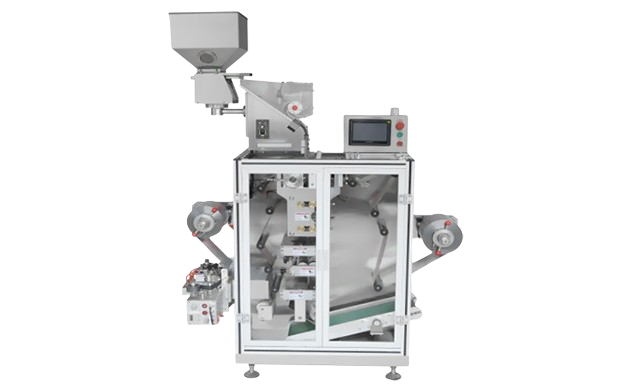
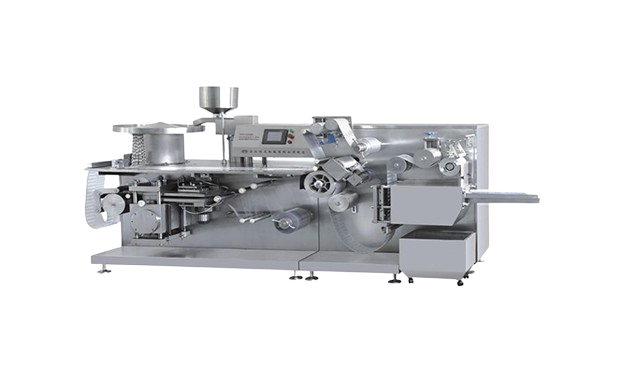
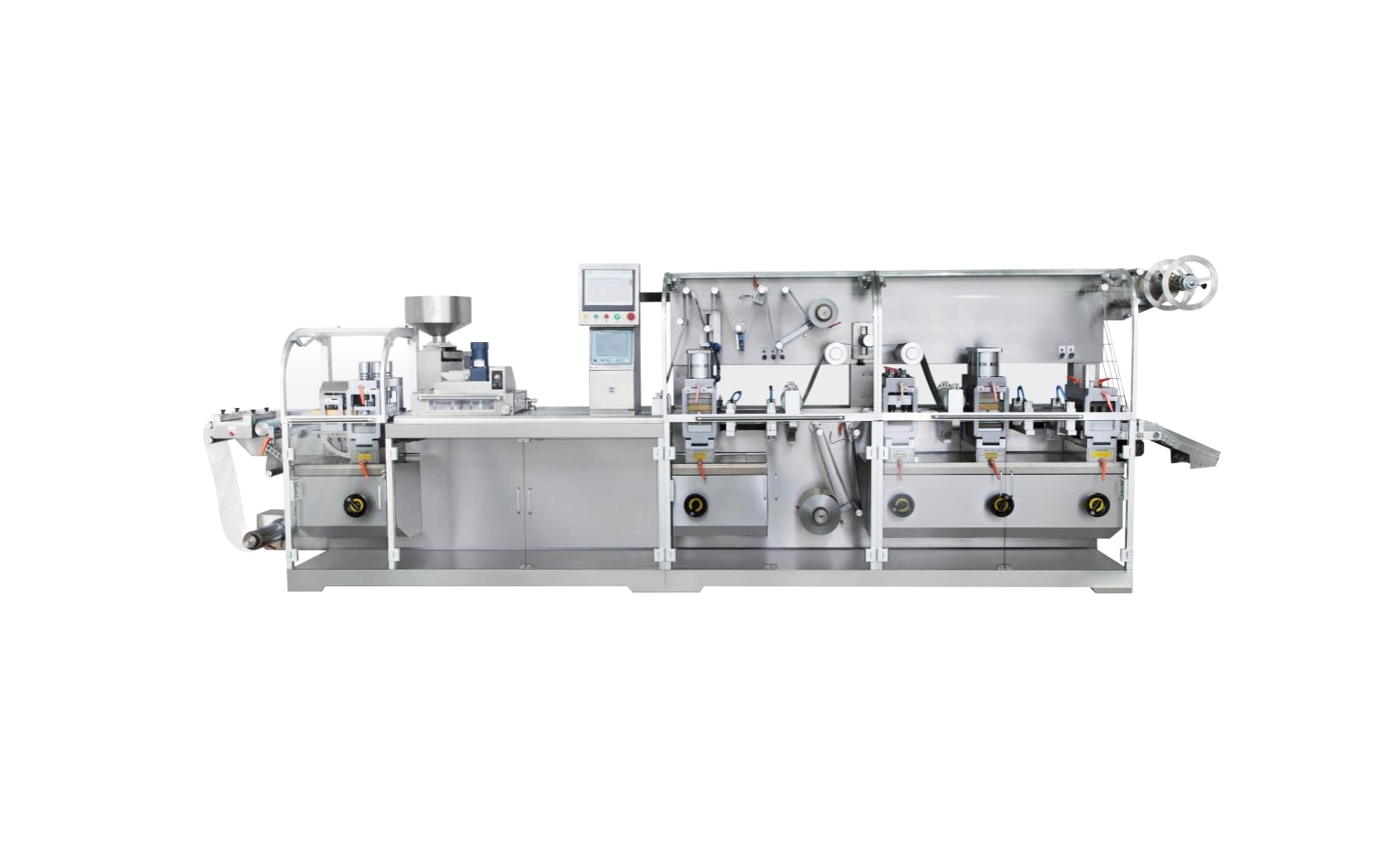
Blister packaging has its constraints. The cavity depth and diameter in a blister card must match the capsule dimensions. A blister tool designed for size 1 capsules cannot seal size 00 capsules without risking crushed or unsealed cavities. Blister tooling is expensive to modify, so the capsule size decision should be locked in before blister packaging design begins.
FAQ
What is the most commonly used capsule size in the pharmaceutical industry?
Size 1 and size 0 are the most common for prescription pharmaceuticals. Size 1 holds enough material for most standard-dose APIs while remaining easy to swallow. Size 0 is more common in the supplement industry. Together, these two sizes account for roughly 70% of all two-piece hard capsule production globally.
Can I switch capsule sizes after my product is already on the market?
You can, but it triggers a regulatory filing in most jurisdictions because it changes the product’s physical characteristics. The FDA treats a capsule size change as a post-approval change that may require a Prior Approval Supplement (PAS) depending on the level of change. You will also need new tooling for your filling line, updated packaging artwork, and possibly new stability studies if the headspace in the bottle changes significantly.
Does capsule size affect dissolution rate?
Indirectly, yes. Larger capsules hold more powder, which means a larger mass that must wet and disperse in the stomach. A size 000 capsule packed with a hydrophobic powder may dissolve more slowly than the same formulation in a size 2 capsule, simply because there is more material for the gastric fluid to penetrate. The difference is usually small for immediate-release formulations but can become meaningful for modified-release products where dissolution is the rate-limiting step.
How do I convert a powder formulation from one capsule size to another?
Measure the tapped bulk density of your blend, multiply by the internal volume of the target capsule size, and verify with actual fill trials. Published fill weight ranges are starting points only. Every formulation behaves differently under compression and vibration inside a filling machine, so bench-top hand-filled samples do not reliably predict machine-filled results. Run at least three full-machine trials at the target speed before locking in the new size.