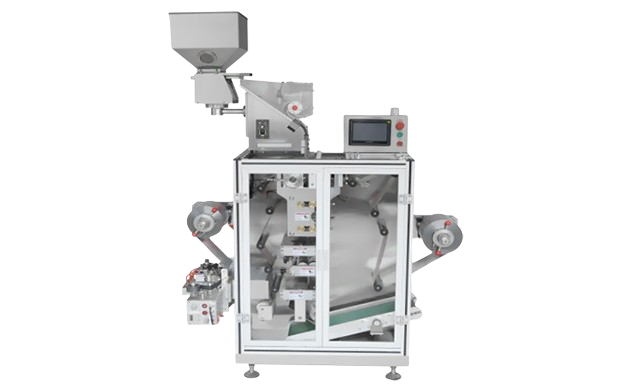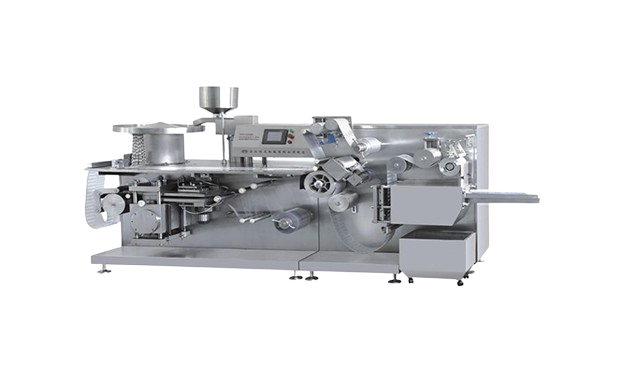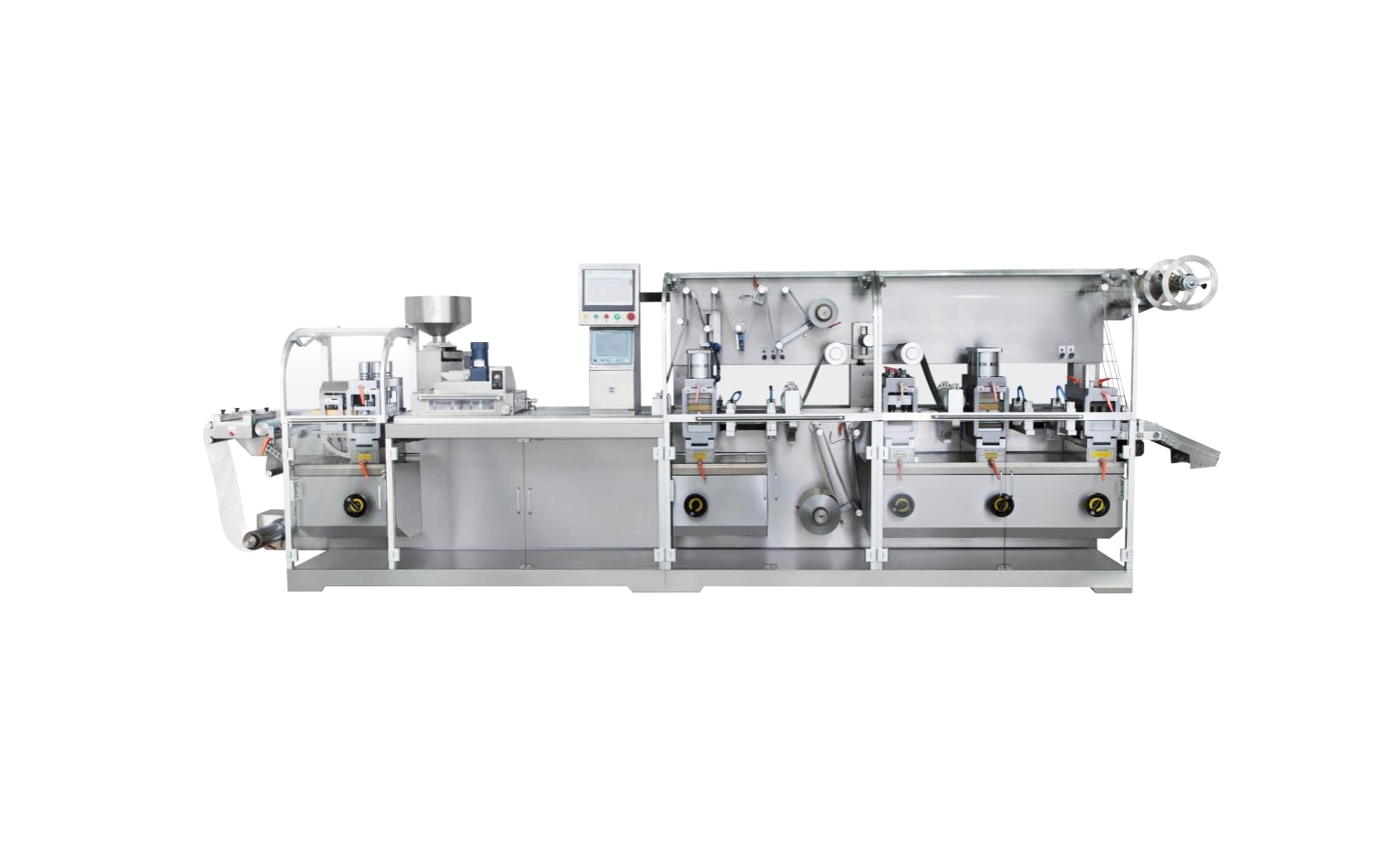
Pharmacy counting looks simple from the pickup window, but behind the counter it is a production step that affects labor cost, inventory accuracy, and regulatory risk. The method a pharmacist uses to count pills shapes which pill counter a buyer should choose, how much technician time the operation consumes, and whether the final count can survive an audit. For procurement teams and facility managers, the real question is not just how pharmacists count pills, but which equipment turns that workflow into a reliable, scalable process.
Pharmacists use pill counters in four main ways. At the low end, they count by hand with trays and spatulas for small or controlled prescriptions. For moderate volumes and special dosage forms, they move to semi-automatic or tabletop electronic counters. For high-throughput dispensing, they rely on automatic tablet counters and capsule counters that feed pills through vibratory channels past photoelectric sensors. For softgels, gummies, and irregular shapes, they use vision counting machines that photograph each unit as it falls.
This guide explains each method from a manufacturing and purchasing perspective. It covers the working principles, compares the main machine types, and shows how to match a pill counter to real production needs, line integration requirements, and validation standards.
Send your product type, dimensions, count per bottle, bottle size, and target bottles/min. SED will recommend a model and arrange a sample test.
Why pharmacy counting methods matter to equipment buyers

Every prescription that leaves a pharmacy depends on an accurate count. Counting performance depends on the product, dust level, vibration settings, sensor condition, and line speed. Confirm performance with representative samples at the target output and document the test conditions. For a facility filling several hundred prescriptions a day, the gap shows up in labor cost, rework, and inventory reconciliation. condition,
The real cost of manual counting
Manual counting with a tray and spatula remains common in independent pharmacies and low-volume settings. The pharmacist or technician pours tablets onto a grooved tray, moves them into groups of five with a spatula, and sweeps the counted group into a vial. The method is flexible and requires almost no capital investment, but it is labor-intensive and sensitive to fatigue. Counting hundreds of prescriptions a day at speed increases the chance of off-by-one or off-by-five errors. It also creates cross-contamination risks if the same tray is used for different drugs without adequate cleaning.
Where automation becomes necessary
High-volume retail pharmacies, hospital outpatient dispensaries, and contract packaging facilities move to automated counting because speed and traceability become critical. An automatic tablet counter can process thousands of pills per hour while logging each fill.
How pharmacists count pills today
Manual counting trays and spatulas
The traditional tray is a flat surface with a lip, a counting channel, and a pour spout. The technician tilts the stock bottle, spreads the tablets across the tray, and uses the spatula to slide them into the channel in batches. When the prescribed quantity is reached, the pills are funneled into the patient vial. This method works well for unusual shapes, fragile coatings, or very small counts where setting up a machine takes longer than counting by hand.
Electronic and semi-automatic counters
Semi-automatic counters use a hopper, a vibrating plate, and a photoelectric or infrared sensor. The operator sets the target count, pours the product into the hopper, and the machine drops the counted quantity into a waiting bottle or tray. A semi-automatic capsule counter is a typical entry point for pharmacies that need faster throughput than hand counting but do not yet require a full production line. These machines are compact, easy to move, and quick to change over between products.
Automatic vision and robotic systems
At the high end, fully automatic counters use multi-channel vibration feeders and photoelectric or vision sensors to count pills continuously. Robotic dispensing systems store drug canisters, retrieve the correct medication, count it, and drop it into a labeled vial. Vision counting machines photograph each pill as it falls and use image processing to identify tablets, capsules, softgels, or gummies. This is especially useful for products that vary in size, color, or shape.
The same counting principles are used at a larger scale in pharmaceutical manufacturing and contract packaging. When continuous bottle filling, higher output, line integration, and documented sample testing become important, buyers typically move from pharmacy counters to industrial multi-channel counting machines.
If you are planning production-scale bottle filling, send your product, count per bottle, bottle size, and target output to receive an SED model recommendation.
What a pill counter machine does in a pharmacy workflow

A pill counter sits between bulk storage and the final packaged bottle. Bulk tablets or capsules are loaded into a hopper. Vibration or gravity feeds the product onto a plate that spreads it into single-file lanes. Each pill passes a sensing zone, where a photoelectric beam or camera registers it. When the preset count is reached, a gate opens and the pills drop into a waiting bottle or container.
Accuracy, dust protection, and sensor calibration
The sensor is the heart of the machine. Photoelectric sensors detect pills by interrupting a light beam. Through-beam sensors place the emitter and receiver on opposite sides of the pill path and work well for small or translucent products. Reflective sensors bounce light off the pill surface but can struggle with dark coatings or glossy capsules.
Dust is the hidden enemy of accuracy. Uncoated tablets and capsules shed fine particles during vibration. That dust settles on sensor lenses, weakens the beam, and causes missed counts or false triggers. Production-grade machines address this with sealed or air-purged lenses, dust-removal channels, and angled designs that keep sensors out of the main dust path. Regular cleaning and calibration keep accuracy high over a full shift.
Types of pill counters for pharmacy and production

| Model | Counting method | Production speed |
|---|---|---|
| SED‑8S | Photoelectric | 10‑40 bottles/min |
| SED‑16S | Photoelectric | 10‑70 bottles/min |
| SED‑8SJ | Vision | 5,000‑6,000 pcs/min depending on product |
Pieces/min and bottles/min are different measures and should not be compared directly.
Semi-automatic tablet and capsule counters
These machines are the bridge between manual counting and full automation. They count accurately but still need an operator to place bottles and start fills. They are popular in laboratories, small pharmacies, and quality-control departments where batch sizes vary and changeover speed matters more than line speed.
Automatic multi-channel counters
Automatic counters use parallel vibration channels to increase throughput. For the referenced SED models, the SED-8S is rated at 10-40 bottles/min and the SED-16S at 10-70 bottles/min. Actual output depends on the count per bottle, product behavior, and bottle specification. These machines handle round, oblong, and coated tablets as well as hard gelatin capsules. A capsule counting filling machine with wide channels is a good fit when the product mix includes larger capsules or irregular shapes.
Vision counting machines
Configured vision models use cameras and image processing to count products and can reject items outside preset size or area thresholds. Suitability for damaged-product or foreign-object detection must be confirmed with representative samples.
How to choose a pill counter machine

Selecting the right machine means matching technical specifications to actual production conditions. Buyers who focus only on price often end up with equipment that is too slow, too fragile, or incompatible with their product mix.
Match capacity to daily volume.
Start with the number of bottles or pills the facility processes in a typical shift. A small compounding pharmacy may only need a few hundred fills per day. A contract packaging facility may need tens of thousands. Entry-level semi-automatic units handle roughly 1,500 to 2,500 pills per hour. Standard automatic lines run at 1,200 to 9,600 bottles per hour depending on channel count. Match the machine to the bottleneck in the existing workflow.
Verify product compatibility.
Not every counter handles every pill. Hard capsules from size 000 to size 5, standard round tablets from 5 mm to 24 mm, and oblong coated tablets all behave differently in vibration channels. Softgels and gummies can stick or deform. Effervescent tablets are moisture-sensitive. Before purchasing, provide the manufacturer with physical samples and run them at the target speed. A good supplier will run a factory acceptance test with your actual product.
Check integration and validation support.
A pill counter needs to talk to bottle unscramblers, conveyors, capping machines, labelers, and checkweighers. Look for PLCs with standard communication protocols and inputs for upstream and downstream signals. For regulated pharmaceutical production, ask whether the supplier provides IQ, OQ, and PQ protocols, material certificates for stainless steel contact parts, and calibration procedures.
SED Pharma pill counter models and specifications
SED Pharma manufactures pill-counting equipment for pharmaceutical, nutraceutical, and contract manufacturing operations. The company operates from a 5,500 m² factory with more than 100 R&D personnel and over 20 patented innovations.
Economy and semi-automatic series
The SED-BS and SED-S series are semi-automatic units for small to medium production scales. They use photoelectric sensors and touch-screen controls to count tablets, capsules, and related granules. These machines suit laboratories, compounding pharmacies, and quality-control departments where flexibility matters more than maximum speed.
Standard and high-speed automatic series
The SED-S-S, SED-SP, and SED-SJ series are fully automatic multi-channel counters. Speeds range from roughly 600 bottles per hour for compact units up to 9,600 bottles per hour for larger channel configurations. The machines handle tablets up to 22–36 mm in diameter and capsules from size 000 to size 5 and can be fitted with dust-removal and anti-static options. The SED-SJ series uses high-resolution cameras and image processing algorithms for vision counting.
Whole-line integration: from counter to filled bottle
A pill counter performs best as part of a synchronized packaging line. Before the counter, a bottle unscrambler feeds empty bottles onto the conveyor. After the counter, a desiccant inserter, capper, foil sealer, and labeler complete the package. A checkweigher at the end verifies that each bottle contains the expected weight. If any station stops, the line control system pauses the entire flow to prevent jams or unfilled bottles.
Cleaning is a line-level concern. Shared conveyors, guide rails, and star wheels can transfer dust or residue between products. Stainless steel surfaces and quick-release change parts reduce this risk. Buyers should ask the line integrator for a cleaning validation plan before the system goes live.
Sample testing and validation before purchase
No specification sheet replaces a real-world test. Reputable manufacturers will accept samples of your actual tablets or capsules and run them on the proposed machine. The test should measure counting accuracy at production speed, broken-pill rate, static behavior, dust generation, and changeover time.
After the test, request a written report with recommended machine settings and a list of wear parts. If the machine will join an existing line, ask for an integration diagram that shows electrical signals, compressed air requirements, and floor space.
Get a pill counter quote: what to request
When you contact a pill counter manufacturer, be ready with the following details. They determine not just the price but whether the proposed machine will actually work in your facility.
- Daily or hourly production volume in bottles or pills
- Product dimensions, shapes, coatings, and fragility
- Bottle sizes and materials
- Required counting accuracy and acceptable reject limits
- Existing line equipment and communication protocols
- Required certifications
- Installation space, power supply, and compressed air availability
- After-sales support, spare parts, and warranty terms
SED Pharma can provide model recommendations, sample testing, and line integration support based on these inputs. If you are evaluating a pill counter for your pharmacy or production facility, request a detailed quote and a sample test report to compare real performance.
Frequently asked questions
What is the difference between a tablet counter and a capsule counter?
Both use sensors or cameras to count solid dose forms. The difference is usually in the feeding geometry and guide-lane spacing. Capsule counters need wider lanes and gentler vibration because capsules are lighter and more prone to static. Many modern machines handle both by changing channel plates and adjusting vibration.
How accurate are automatic pill counters in continuous production?
Well-maintained automatic counters achieve near-perfect accuracy rates. Accuracy depends on sensor calibration, dust control, vibration tuning, and product consistency. Regular cleaning and calibration keep accuracy stable across a full shift.
Can a pill counter handle gummies, softgels, and nicotine pouches?
Standard photoelectric counters struggle with sticky or deformable products. Gummies and softgels usually need a vision counting machine or a specially designed multi-channel counter with anti-stick surfaces and controlled vibration. Nicotine pouches and similar granules may need a custom feeding system. Always test samples before committing to a machine.