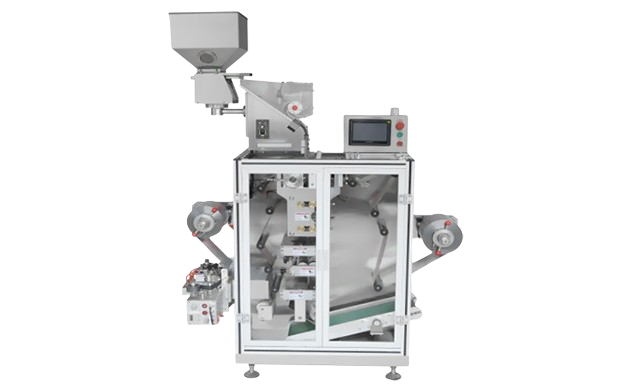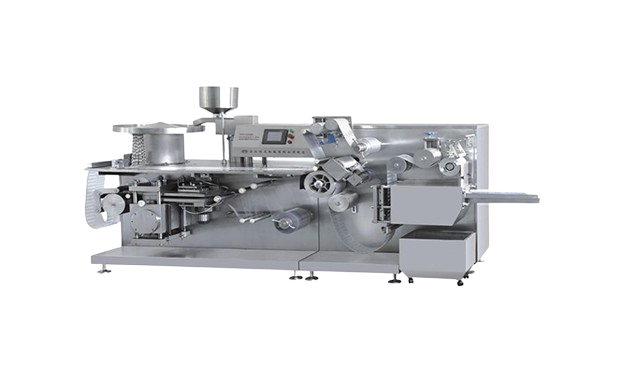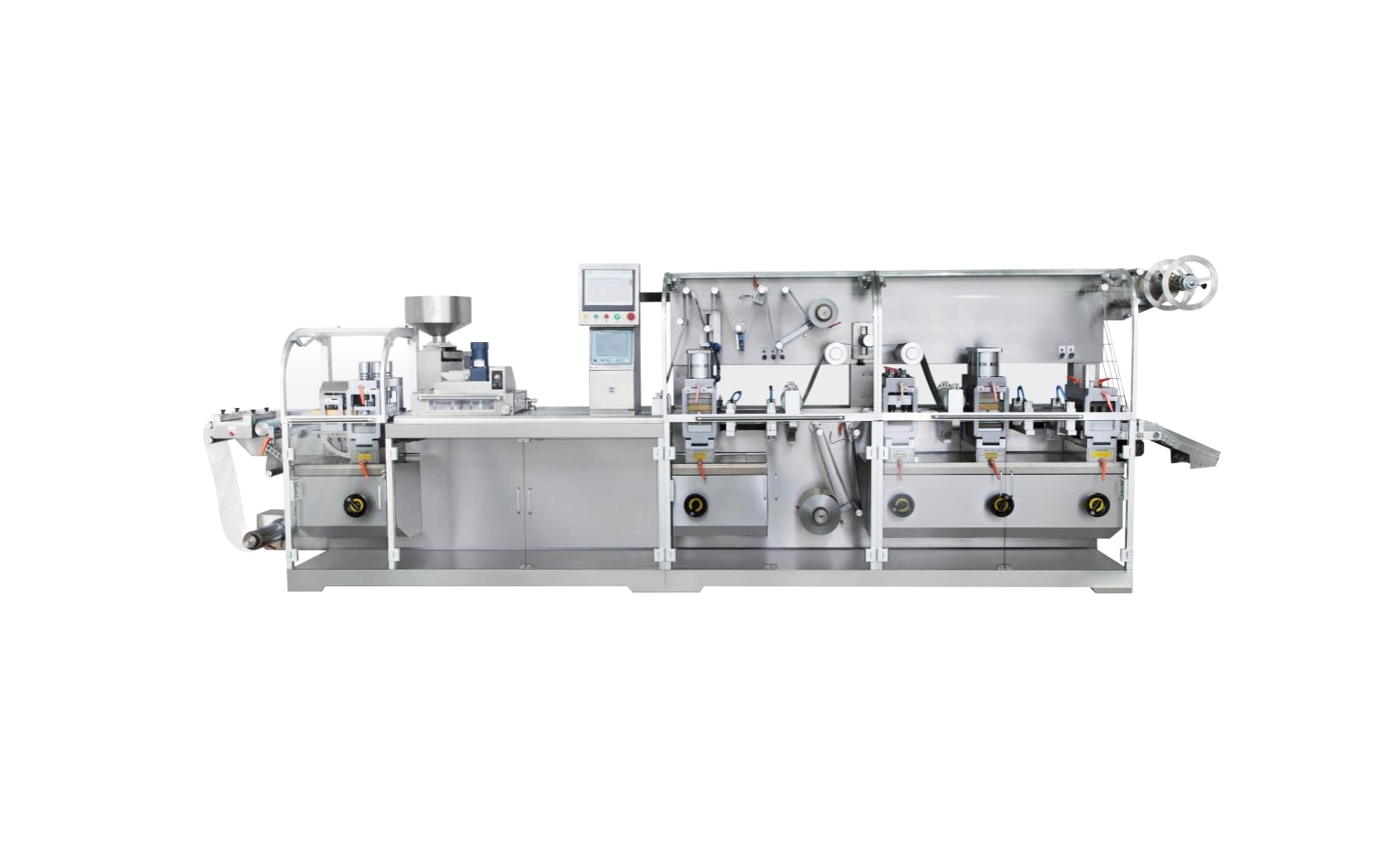
Most inquiries for a tablet press machine start with a problem, not a machine: an order book has outgrown the press, weight variation is eating into yield, or a new formulation behaves differently. All three land in the same place, because compression is where powder becomes a sellable unit and where dose accuracy, output, and batch records are decided at once. Our tablet press range shows the model families first.
A tablet press machine compresses a measured amount of powder or granules inside a die into a tablet of set weight, thickness, and hardness. Depending on the model and control package, the press may monitor compression force, store batch data, and reject out-of-tolerance tablets.
Below: what the machine does, how the cycle runs, what output is realistic, and what to send before asking for a price.
| Model | Output range | Tablet diameter | Best for | Quotation |
|---|---|---|---|---|
| High-Speed Rotary Tablet Press Machine (SED-GY-B series) | 30,000-675,000 pcs/hr | 11-25 mm | High-volume production across multiple shifts | Request a quote. |
| Rotary Tablet Press Machine (SED-Y-B series) | 6,000-190,000 pcs/hr | 13-50 mm | Growing lines needing a wide size range | Request a quote. |
| Single Punch Tablet Press Machine (SED-DY-D series) | 1,200-5,000 pcs/hr | 12-25 mm | Formulation trials, R&D, small batches | Request a quote. |
All output, diameter, and price information in this table comes from SED Pharma product pages and the tablet press range page, checked 9 September 2026. SED publishes no list prices, so every quotation is prepared per project. Send us your details and we will match a model and quote.
What a tablet press does on a production line

Its job is to turn a measured dose of loose powder into a solid unit that survives dedusting, packing, and transport while delivering the same amount of active ingredient every time. Every function on the machine protects that one conversion.
The four jobs it performs
- Compression. An upper and lower punch meet inside a die with force measured in kilonewtons, bonding the particles into a solid.
- Metering. The machine sets how much material sits in the die before any force is applied. That volume, not the pressing, sets tablet weight.
- Repetition at speed. A rotary press runs the cycle at every station on every turret revolution, so output scales with station count and speed.
- Recording the batch. Presses log compression force during the run. Automatic rejection of out-of-tolerance tablets is standard on selected models and optional on others—please confirm your required configuration in the quotation.
What a tablet press does not do
A press does not granulate, and no setting fixes a badly prepared blend. It does not fill capsules, coats, counts, or packs; those are separate machines.
How a tablet press machine works, step by step
One compression cycle has five stages: the die is filled, the excess is metered off, the powder is lightly pre-compressed, the main force is applied, and the tablet is pushed out. On a rotary press that runs at every station on every turn of the turret.
- Filling. Granules flow from the hopper through a feed frame into the die bore; high-speed presses use a force feeder instead of gravity.
- Metering. The lower punch rises to a set height and pushes the excess out, and a scraper wipes it off the die table. What remains is the tablet weight.
- Pre-compression. A lighter first roll squeezes the powder and pushes trapped air out. Formulations that cap or laminate usually improve here.
- Main compression. The main compression rollers bring the punches to the set compression position. The resulting force, together with formulation properties and dwell time, influences tablet strength; the roller gap primarily controls tablet thickness.
- Ejection. The upper punch clears the die, the lower punch rises, and a take-off blade sweeps the tablet into the chute.
| Parameter | What it changes | When it is set |
|---|---|---|
| Fill depth. | Tablet weight | At setup, trimmed against weight checks |
| Feed frame speed | Fill consistency at speed. | At setup and after speed changes |
| Pre-compression force | Air removal, capping risk | During formulation trials |
| Main compression force | Hardness and thickness | During trials, monitored in-run |
| Turret speed | Output rate and dwell time | At setup, limited by material flow |
What output can you really expect?
Nameplate capacity is measured under favorable conditions: free-flowing granule, small tablet, full turret speed, and no interruptions. Real shift output is usually lower, and that gap is the number worth planning with.
| Factor | Effect on the nameplate figure |
|---|---|
| Number of stations | Output scales with station count at a given speed. |
| Material flow | Poor flow forces a lower speed to hold weight variation. |
| Tablet size | Larger tablets generally run slower than small ones. |
| Number of SKUs | Changeover and cleaning come off available hours. |
| Downstream capacity | Dedusting or packing slower than the press holds it back. |
Work from your own shift pattern instead of one hourly figure:
Annual output = hourly output x shift hours per day x operating days per year x overall equipment effectiveness
Every term is yours to fill in, and OEE is where plans go wrong, since it carries changeover, cleaning, start-up, and unplanned stops. SED lists up to 675,000 pcs/hr on the largest high-speed rotary tablet press machine in the SED-GY-B series, a figure reached with a high station count and a small tablet diameter (SED product page, checked 9 September 2026). Ask which configuration a headline number refers to, then ask what that press does on your material.
Single punch or rotary: which one does your job?

A single punch press makes one tablet per cycle with one tooling set, which suits trials and small batches. A rotary press carries many stations around a turret and makes one tablet per station per revolution, which is how commercial volumes are reached.
| Single punch press | Rotary press | |
|---|---|---|
| Stations | One | Many, set by the turret |
| Output band | Low thousands per hour | Tens to hundreds of thousands per hour |
| Tooling cost per size | Low | Higher, one set per station |
| Changeover | Fast, few parts | Longer, but designed for it |
| Best fit | R&D, clinical, and pilot batches | Commercial and contract production |
Where a single punch press fits
Buyers pick a single punch tablet press machine while the formulation is still moving. It lets you test compression behavior, hardness, and disintegration on small quantities without committing to a full tooling set. SED-DY-D models run 1,200 to 5,000 pcs/hr at 15 to 60 kN in automatic or manual mode (SED product data, checked 9 September 2026).
Where a rotary press fits
Once the formulation is settled and orders repeat, the calculation changes. A rotary tablet press machine in the SED-Y-B series covers 6,000 to 190,000 pcs/hr across 7 to 45 stations, with pressure up to 130 kN and diameters up to 50 mm on larger models (SED product data, checked 9 September 2026). That spread lets you size to today’s order book and keep headroom on the turret.
What the machine does beyond compressing: tooling and shapes
Tooling decides the tablet you actually get. The press supplies force and repeatability; the punch and die set decide diameter, shape, thickness, break line, and any embossing.
Punch and die sets, shapes, and embossing
Each station uses an upper punch, a lower punch, and a die. A punch tip shape gives flat, concave, or bevelled faces; the die bore sets the outline, and scoring, logos, and dose markings are cut into the punch faces. Tooling is normally hardened tool steel, with carbide grades where the formulation is abrasive. Worn tooling shows up as weight drift and picking.
Changeover when you run more than one SKU
Plan to change parts into the budget, not just the machine. Each extra size needs its own punch sets and die inserts, plus dry, separated storage. Ask how long a full changeover and clean takes on the quoted model, because that number belongs in your OEE figure.
Quality parameters the press controls and how to verify them
Fill depth controls target weight; compression position and formulation influence thickness and breaking force; turret speed changes dwell time and die filling.
| Parameter | What it tells you | What to confirm before ordering |
|---|---|---|
| Weight variation | Whether die filling is consistent | Manual or automatic weight control, and whether in-run rejection is included |
| Hardness | Whether the tablet survives packing | Force range covered, per-station monitoring |
| Friability | How much the tablet dusts and chips | Acceptance target and test method for your market |
| Thickness | Consistency of the compression setting | Measured in-run or offline |
| Appearance | Sticking, picking, chipping, mottling | A trial on your granule, not a demo blend |
Note: Recording, per-station monitoring, automatic weight control, and rejection are standard, optional, or selected models. Please confirm the required configuration in the quotation.
Set tablet breaking-force targets during formulation development and confirm them against friability, disintegration, and dissolution requirements for the intended market. Record the agreed acceptance range in the trial and FAT protocol.
Where the press sits in a complete tablet line
A tablet press sits between granulation and primary packaging. It receives free-flowing granules from upstream and discharges tablets that still need dedusting, inspection, and packing, so its interfaces matter as much as its output figure.
Upstream, blending and granulation prepare the material, and if those steps are inconsistent, no press setting will rescue the batch. Downstream, tablets carry fine powder out of the die table, so a tablet deduster normally follows the discharge chute, then metal detection or check weighing, then coating, counting, or blister packing.
| Interface | What to specify |
|---|---|
| Discharge height and side | Take-off height and chute direction into the deduster |
| Dust extraction port | Port size and the airflow your system can deliver |
| Electrical supply | Voltage, frequency, and phase at your site |
| Compressed air | Available pressure and consumption for the quoted model |
| Floor space and weight | Footprint, machine weight, clearance to pull tooling |
SED-GY-B models range from 1,400 to 3,980 kg net with dimensions up to 1704 x 1380 x 1926 mm (SED product data, checked 9 September 2026). Those numbers decide whether the machine enters an existing room or a new one.
What to send: a tablet press manufacturer before asking for a price

Material and trial requirements
- Granule or powder description, including bulk density and flow behavior
- Whether the material is moisture sensitive, abrasive, or prone to sticking
- Target tablet weight, diameter, shape, thickness, and hardness
- Batch sizes, shift pattern, utilities, and room conditions
On sample quantity, ask rather than guess. Trial quantities depend on the press, the tablet size, and how many settings need proving, so let the manufacturer state what they need.
The quote checklist
Model and station count; output range and the diameter it assumes; tooling sets included; electrical build for your market; spares shipped with the machine; warranty and service response; documentation and commissioning support; installation and training scope; lead time and payment terms.
SED Pharma includes installation and training services and a one-year warranty on its tablet presses, as published on the tablet press range page (checked 9 September 2026). Ask any supplier to put the same items in writing, because that is where quotations diverge once machine prices look similar.
Why buyers shortlist SED Pharma
SED Pharma builds both single-punch and rotary tablet presses and scopes the compression step as part of a complete solid dose line rather than as a machine sold on its own.
SED operates from a 5,500-square-meter facility with more than 100 R&D personnel and over 20 patents, and its equipment is used by more than 300 companies, per the figures published on the tablet press range page (checked 9 September 2026). Presses are built in stainless steel to GMP requirements, with pressure sensors monitoring working force, enclosed zones to limit dust, and guarding plus emergency stops. SED also supplies mixing, granulating, dedusting, coating, and counting equipment, so a press enquiry can be scoped against upstream and downstream steps together.
Send SED Pharma your tablet diameter, target hourly output, and site utilities to receive a model recommendation and a quotation.
SED Pharma is an expert manufacturer of pharmaceutical machinery and packaging equipment, as well as quality control devices.
FAQ
Can one tablet press run more than one tablet size or shape?
Yes, within the limits of the tooling and die table. Each size and shape needs its own punch and die set, and switching means a changeover and a clean. Buyers running several SKUs should plan tooling sets and changeover time into the capacity calculation.
What utilities and floor space should be ready before delivery?
Confirm the electrical build for your market, the compressed air supply, and the dust extraction connection before delivery. Floor space is the part most often missed: check footprint, machine weight, and clearance to pull tooling, then confirm the floor can take the load.
How is a trial run set up before purchase?
The buyer sends material and target specifications, then the manufacturer runs it on a comparable press and reports weight variation, hardness, appearance, and achievable speed. Ask what you receive afterwards, since your quality team will need that report.
Take the decisions in order: what the press has to produce, what it has to produce it from, how the material behaves under force, and only then which model. Capacity figures are easy to compare and easy to misread, and a press specified against your own granule, shift pattern, and downstream equipment is the one that performs after installation. Send SED Pharma your tablet diameter, target output, and site utilities for a configuration and a quotation.