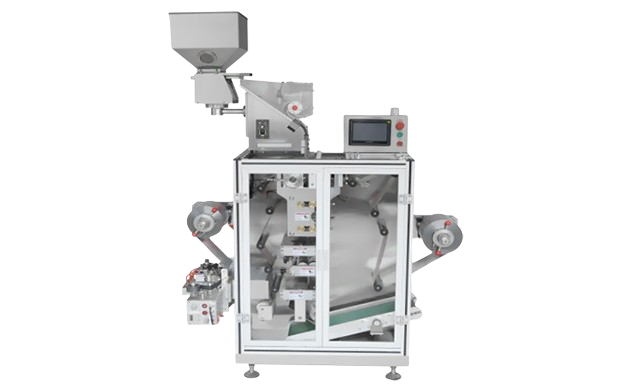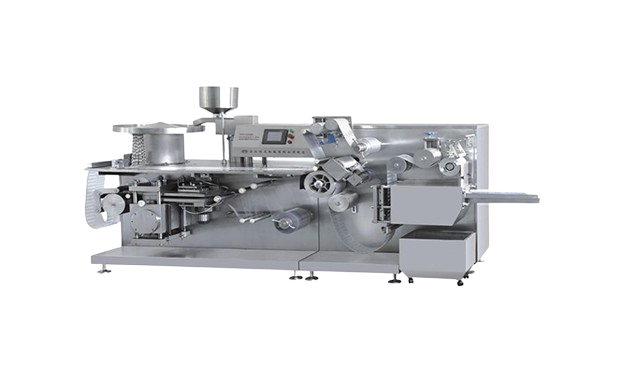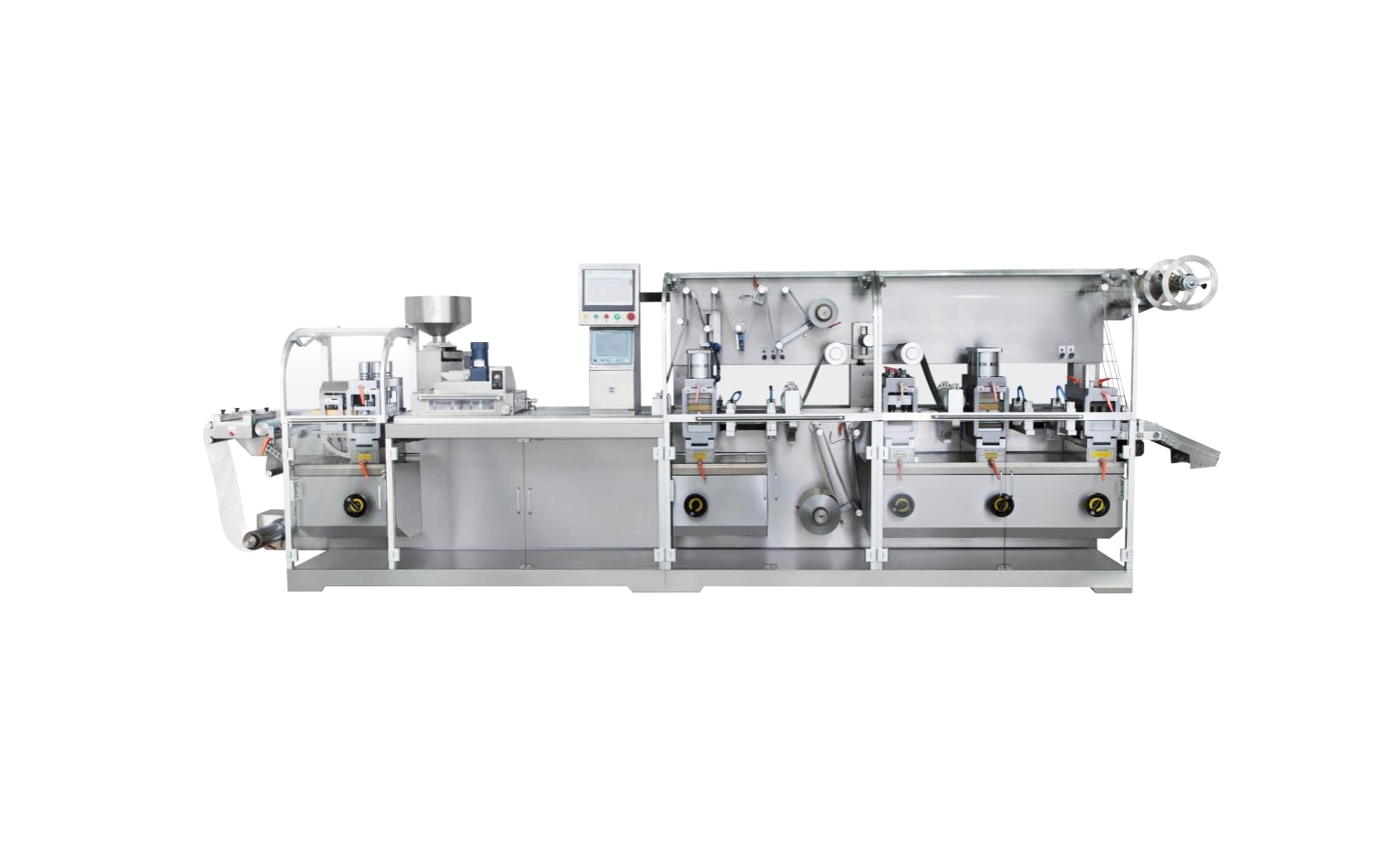
Rotary tablet press, also known as a multi-station tablet press, is an advanced tablet compression machine designed to address the limitations of traditional single-punch tablet presses, particularly issues such as uneven tablet density, fragility, and inefficiency. The machine compresses tablets simultaneously from both the top and bottom, expelling the air from the die cavity to ensure uniform tablet density. Additionally, rotary tablet presses offer advantages including low machine vibration, reduced noise, energy efficiency, high productivity, and precise tablet weight control.
The Prospect of Tablet Press
According to the report “Tablet Processing and Packaging Equipment Market – Global Opportunity Analysis and Industry Forecast (2017-2022)”, the global tablet processing and packaging equipment market is expected to grow at a compound annual growth rate (CAGR) of 8.8%, reaching $5.2688 billion by 2022. This growth is driven by factors such as an aging population, rising prevalence of chronic and infectious diseases, and advancements in pharmaceutical technology.
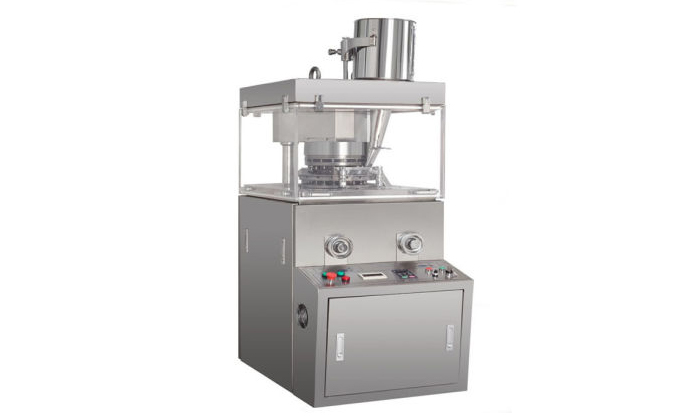
Faced with intensifying competition and the growing threat of antibiotic resistance, pharmaceutical companies are under pressure to rapidly develop new drugs. Additionally, the global demand for medications continues to rise due to demographic shifts and increasing rates of chronic diseases, further compelling pharmaceutical firms to enhance production output.
This has led to a surge in demand for pharmaceutical processing equipment, as it streamlines various stages of tablet production and addresses labor-intensive challenges inherent in traditional methods, which contribute to extended manufacturing times and higher production costs. Consequently, the adoption of automated equipment across different stages of tablet manufacturing is increasing to significantly reduce errors and manual operations, while improving the efficiency of tablet processing and manufacturing.
Selection Guide: Rotary Press vs. Single-Punch Press: Which One to Choose?
Choosing the right tablet press machine requires more than comparing production speed and purchase price. The machine must suit the formulation, tablet specifications, batch schedule, tooling requirements, factory conditions, and downstream process.
| Comparison | Single Punch Press | Rotary Tablet Press |
|---|---|---|
| Working Method | One tablet per cycle | Continuous rotation, multiple stations working simultaneously |
| Production Capacity | Low, suitable for small batches | High, ideal for mass production |
| Applicable Scenario | R&D, small-batch, frequent product changeovers | Large-scale commercial manufacturing |
SED Pharma Product Recommendations:
For R&D, laboratory, or small-batch production—SED-250-5Y-D Rotary Tablet Press:
- 5 sets of dies, max output 9,000 pcs/hr
- Max pressure 60 kN, max tablet diameter 20 mm (EU D) or 13 mm (EU B)
- Fully enclosed transparent windows, touch screen PLC control, GMP compliant
- Net weight 398 kg, compact footprint 480*635*1100 mm
For high-speed mass production—SED-GY-B Series High Speed Rotary Tablet Press:
- 29–75 punch dies, output up to 675,000 pcs/hr
- Max pressure 80–100 kN, max tablet diameter 11–25 mm
- Stainless steel, cGMP standard, pressure sensors for monitoring
- Servo control, fully enclosed working conditions, easy to clean
- Model options for different capacity needs (from 32 to 75 stations)
The Working Process of the Tablet Press
The working process of the tablet press can be divided into the following steps:
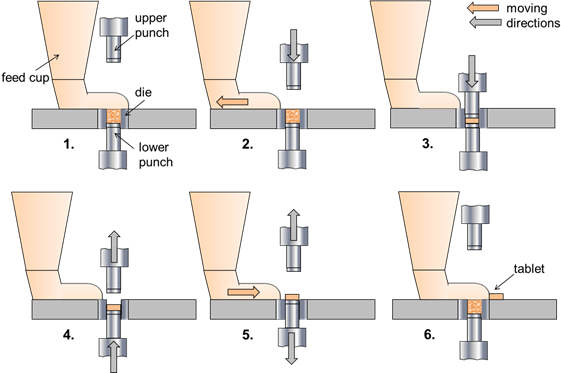
- The punch position of the down punch (its working position is upward) extends from the lower end of the middle mold hole into the middle mold hole to seal the bottom of the middle mold hole
- Use a feeder to fill the middle mold hole with medicine
- The punch part of the upper punch (its working position facing downwards) falls from the upper end of the middle die hole into the middle die hole, and goes down a certain stroke to compress the powder into tablets
- The upper punch lifts out the hole. The downward punching and rising will push the tablets out of the middle die hole to complete a tablet pressing process
- The undershoot drops to the original position, ready for the next filling
Applications of Rotary Tablet Press
1. Raw Material Compatibility
Rotary tablet presses are ideal for granular powders and materials with good flowability. However, they are not recommended for:
- Sticky or semi-solid materials
- High-moisture or heat-sensitive substances
- Non-granular powders
2. Diversity in Shape and Size
Rotary tablet presses can compress powders or granules into tablets of various shapes, including round, oval, square, or customized designs. They support single or double-sided engraving and are suitable for:
- Candy tablets
- Calcium tablets
- Double-sided imprinted tablets

3. Industry Applications
Our rotary tablet presses serve a wide range of industries:
- Pharmaceuticals
- Nutraceuticals
- Cosmetics
- Confectionery
- Daily chemical industry (detergents and cleaning tablets)
- Chemical industry
4. Color
Whether it’s a single color, two-color or multi-color, the tablet press can perfectly meet your requirements

What Are the Advantages of Rotary Tablet Press?
- High Production Capacity: Capable of producing 100,000–170,000 tablets per hour, ideal for large-scale operations
- Uniform Compression: Dual-action pressing prevents density inconsistencies, ensuring higher tablet quality
- Low Noise & Energy Consumption: Designed for quiet operation with minimal vibration
- Reduced Material Waste: Accurate dosing and filling mechanisms minimize material loss
- Easy Maintenance & Operation: Features transparent windows, user-friendly controls, and easy-clean design
- Multi-Shape & Multi-Color Capabilities: Supports production of round, irregular, embossed, and multi-color tablets
Conclusion
SED Pharma specializes in advanced tableting technologies designed to meet the evolving needs of the global pharmaceutical and packaging industries. Our rotary tablet presses are GMP compliant, customizable, and designed for long-term high-performance operation. Contact us today to learn more.
FAQ
Q1: Is a rotary tablet press suitable for poor-flowability powders?
A: Rotary tablet presses generally require materials with good flowability. For powders with poor flow, we recommend pre-granulation or equipping the machine with a forced feeder to ensure uniform die filling and stable tablet weight. For sticky or highly hygroscopic materials, we suggest conducting a small-scale trial first.
Q2: How long does it take to change tooling and adjust settings when switching product specifications?
A: Changeover time depends on the model and operator experience. For our SED-250-5Y-D (5‑station model), tooling change and initial adjustment typically take 15–30 minutes. For high-speed multi-station models (e.g., GY‑B series with 29–75 stations), it usually takes 40–60 minutes due to higher precision requirements. Our machines feature quick‑lock tooling structures to further reduce downtime.
Q3: Is the equipment easy to clean and maintain? Does it meet GMP requirements?
A: Yes. Our rotary tablet presses feature fully enclosed stainless steel bodies, transparent protective windows, and removable discharge chutes, with smooth, dead‑angle‑free surfaces for easy wiping and cleaning. All product‑contact parts are made of GMP‑compliant materials. An optional CIP (clean‑in‑place) system is also available to meet pharmaceutical and food industry sanitation standards.